Operations & Process Optimization

Stop losing revenue to broken workflows.

We map, diagnose, and re-engineer your operational processes: removing friction, automating repetition, and surfacing where performance is leaking.

30–60% Avg. manual task reduction
2–4 wks Time to first workflow live
L4 Ongoing retainer support
The Problem

Most growing businesses do not have an execution problem. They have a systems problem.

As companies scale, workflows that worked for 10 people collapse under 100. Data gets re-entered across multiple systems. Reporting lives in someone’s spreadsheet.

Decisions get made slowly because no one knows what is actually happening. Every week of delay costs real money: wasted labour, missed opportunities, and decisions made on incomplete information.

The businesses that scale efficiently are the ones that invested in their operational infrastructure early. That means designed workflows, automated handoffs, and real-time visibility.
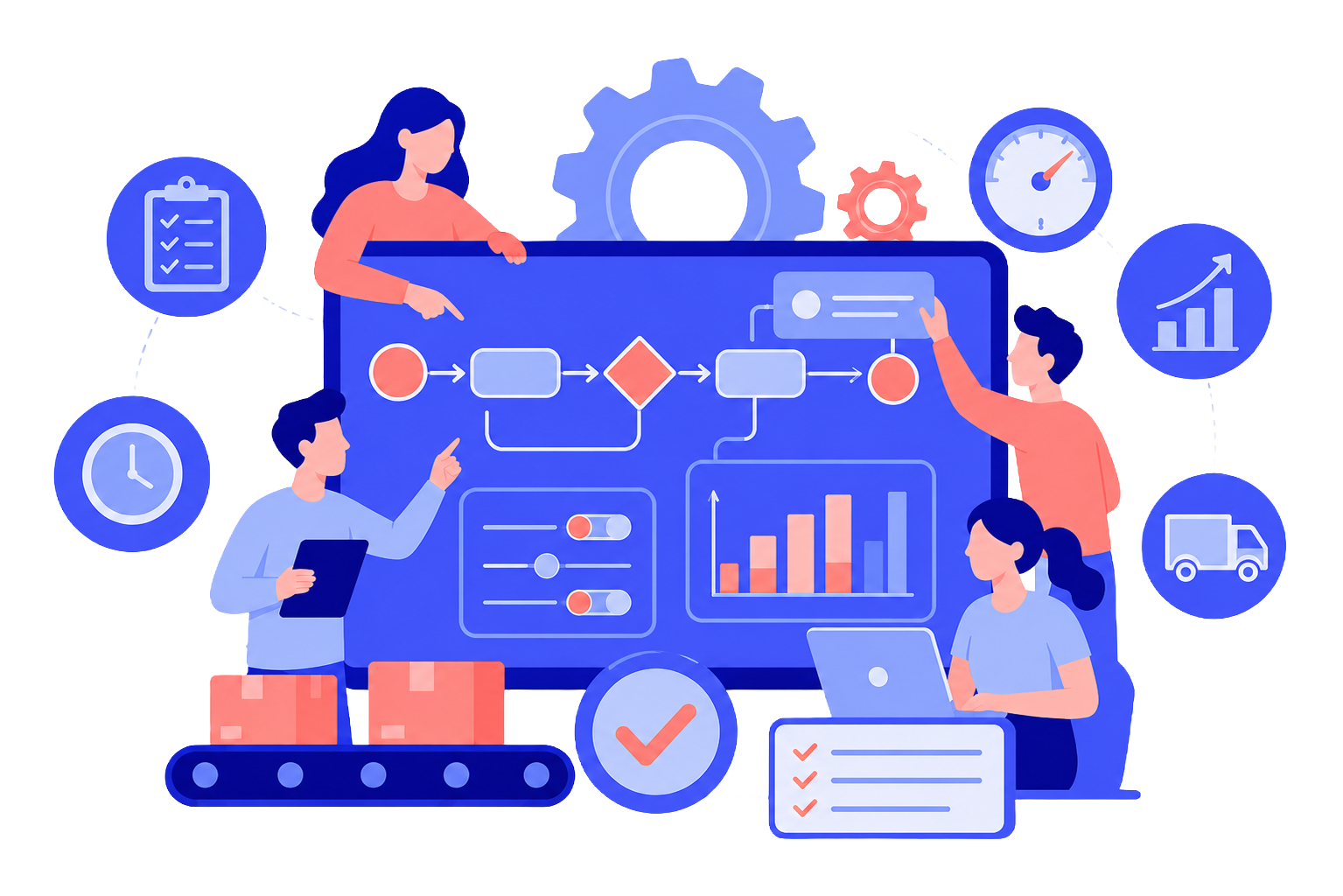
Vector illustration of operational workflow and analytics
What We Deliver

We redesign the operational core of your business.

Workflows, automation, and reporting, so your team spends time on work that matters, not on managing broken processes.

Audit

Operational Diagnosis

Full audit of current workflows, tools, and reporting. We document where time is lost and where data integrity breaks down.

Design

Process Re-Engineering

Redesign core workflows with defined ownership, defined inputs/outputs, and automation at every viable touchpoint.

Automation

Workflow Automation

Build and deploy automated triggers, approvals, and data flows using your existing stack or best-fit SaaS tools.

Visibility

Performance Dashboards

Real-time reporting that gives ops leaders visibility into throughput, bottlenecks, and team-level performance.

Continuity

Continuous Improvement Retainer

Ongoing L4 support to monitor, iterate, and expand systems as your business evolves.

By The Numbers

Operational inefficiency has a measurable cost. So does fixing it.

Businesses that invest in operational infrastructure early grow faster, with less friction and lower headcount overhead.

30–60% Manual task reduction Average across workflow automation engagements
2–4 weeks Time to first workflow live From audit start to first automated process
6–8 weeks Measurable impact Based on typical engagement timelines
How It Works

A clean path from audit to live operations.

01

Workflow Audit

Review current processes, interview stakeholders, identify every point of friction and reporting failure.

02

Design & Prioritise

Map the target state, prioritise quick wins vs. structural changes, and plan a rollout that does not disrupt live operations.

03

Build & Deploy

Automation, dashboards, and new workflows go live with full documentation and team training included.

04

Sustain & Scale

Ongoing retainer to monitor performance, resolve edge cases, and expand scope as the business grows.

Why Project 67

We do not just tell you what is broken. We fix it.

There are plenty of consultants who will tell you what is wrong with your operations. We are the team that fixes it, measures it, and keeps it working.

We implement, not just advise

No slide decks of recommendations. We build the actual systems and stay involved through go-live and beyond.

We design around your existing stack

We do not require you to buy new software. We make your current tools work the way they should have from the start.

Outcomes are defined before we start

We agree on measurable targets at the beginning so you know exactly what success looks like.

L4 ongoing support is standard

Every engagement includes continuous improvement support. Our relationship does not end at go-live.

What Changes

Imagine your operations team working on growth, not maintenance.

When your workflows are clean, your data is reliable, and your reporting is automatic, your team’s energy shifts. Instead of spending Monday morning reconciling last week’s numbers, they focus on the decisions that drive the business forward.

“You’ve built a business worth running well. Let’s build the operations to match.”
Get Started

Start with a free 30-minute Operational Audit Call.

We’ll review your current workflows, identify your top three operational friction points, and show you exactly where automation and process redesign would have the most impact.

Book your free consultation

Tell us where your operations are getting stuck.


Frequently Asked Questions

Straight answers before we start.

Most audits take two to three weeks depending on team size and workflow complexity. We work around your schedule and keep demands on your staff minimal.

No. We design around your existing stack wherever possible. If a gap in your toolset is genuinely creating problems, we will flag options, but replacement is never the default.

That is exactly the situation we are built for. Undocumented processes are common, and often where the most waste is hiding.

We implement, not just advise. Traditional consultants deliver recommendations; execution is left to you. We stay involved through implementation and ongoing support.

Continuous monitoring of automated workflows, resolving issues as they emerge, iterating on systems as your business changes, and expanding automation scope over time.

We define measurable targets before we start: task hours saved, error rate reduction, reporting turnaround, and baseline them during the audit.

Yes. The workflows and dashboards we build are cloud-based. We also structure handoff protocols specifically for asynchronous or distributed teams.

Financial services, healthcare operations, logistics, professional services, and BPO environments, but the operational challenges we solve are consistent across industries.

Minimal. Two to four structured interviews in the audit phase, then feedback at defined milestones. We do the heavy lifting.

Most clients have their first automated workflow live within two to four weeks of engagement start. Measurable impact typically appears within six to eight weeks.